On a film set, the unit production manager is the most senior member of the below-the-line crew, the person who turns a producer’s budget into a day-by-day operational reality [1]. Understanding the unit production manager role means understanding how a production actually runs: who controls the below-the-line spend, who builds the shooting schedule, and who keeps every department moving. This article explains the duties, the reporting structure, the skills required and how the position compares to neighbouring roles, with a focus on how modern production management software reshapes the job.
What a unit production manager does
A unit production manager (UPM) oversees the logistics of a production and administers its below-the-line budget. On United States union sets, “unit production manager” is the official title approved by the Directors Guild of America for the top below-the-line staff position, responsible for the administration of a feature film or television production [2]. The UPM takes the big-picture budgetary plan laid out by the producers and executes it on a day-by-day basis, controlling the flow of high-level logistical decisions around scheduling and spending [1].
The position sits at the centre of the production office. The UPM reports to the line producer, who oversees production and helps decide the costs tied to the daily shoot, and in turn supervises the production coordinator and the wider office team [1]. In practice the UPM is the operational hub that connects creative intent above the line with the practical execution handled by every department below it.
Core duties across the production timeline
The duties of a unit production manager span three phases: pre-production, principal photography and wrap. During pre-production, the UPM develops detailed shooting schedules based on the script breakdown, coordinates location scouting and permits, and prepares comprehensive budgets covering personnel, equipment, transportation and housing [6]. This is where most of the logistical plan is set, and where a clear, well-structured production plan pays for itself.
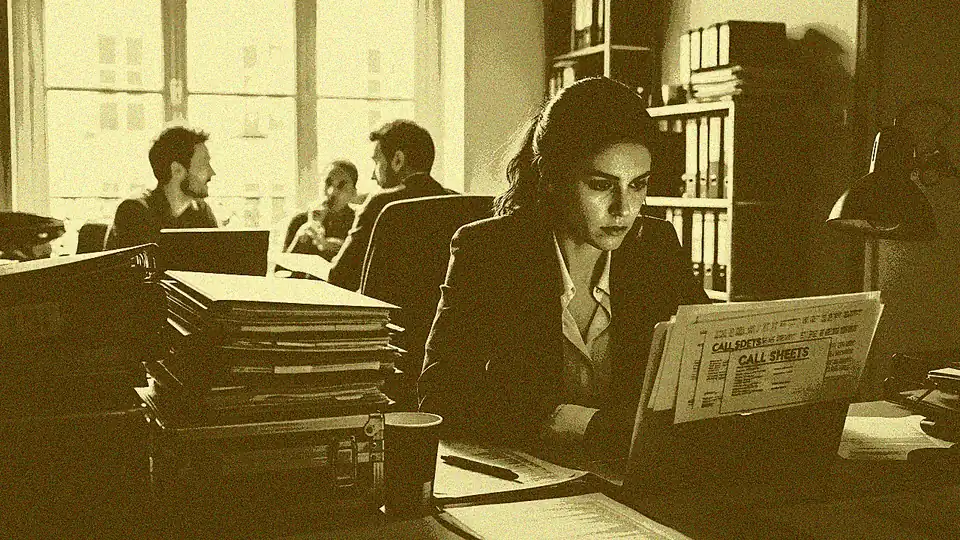
Once cameras roll, the UPM moves into daily operations. Each morning the production reports mark arrival times, the UPM checks in with each department head, and load-in is verified before work begins [5]. The UPM negotiates crew and vendor deals, manages relationships with the studio and the line producer, and signs off on major expenditures [7]. A practical understanding of the call sheet and how it is built is central to keeping each day on track.
Budget control as the central task
The UPM controls the below-the-line budget specifically: the crew, equipment, locations and logistics, as opposed to above-the-line costs such as the principal cast and director. Creating a working budget that accounts for personnel, equipment and locations, then defending it against daily pressure, is the heart of the job [6]. Every scheduling decision has a cost, and the UPM is the person who reconciles the two in real time.
Crew coordination and communication
Part of the UPM’s duties is to oversee the production coordinator and to listen to each department head to understand their needs [1]. Clear communication is non-negotiable: a single change to the schedule cascades across camera, grip, electric, art, costume and transport. Centralising that information, rather than relying on scattered emails and spreadsheets, is where dedicated crew scheduling software changes the daily workload.
UPM versus line producer and production manager
Confusion between titles is common, and the distinctions matter on a contract. The line producer sits above the UPM, owning the overall production budget and the high-level cost decisions, while the UPM executes that plan on the ground and controls the below-the-line spend day to day [1]. On union sets, the official job title is “unit production manager” precisely because the Directors Guild of America governs the position; to work on a DGA-signatory set, a production manager must be a member of the guild [2].
| Dimension | Line producer | Unit production manager | Production coordinator |
|---|---|---|---|
| Seniority | Above-the-line liaison, top of production | Most senior below-the-line staff | Office lead reporting to UPM |
| Budget scope | Overall production budget | Below-the-line budget, day to day | No budget authority |
| Main focus | Cost strategy and studio relations | Logistics, schedule, vendor deals | Office paperwork and flow |
| Schedule role | Approves the plan | Builds and runs the schedule | Distributes call sheets |
| Union title | Often non-DGA | DGA-recognised title | Not a DGA title |
| Hiring authority | Sets the framework | Negotiates crew and vendor deals | Supports hiring admin |
| Reporting line | To producers and studio | To line producer | To UPM |
| On-set presence | Selective | Daily, hands-on | Office-based |
Skills, salary and career path
The job rewards a specific profile: financial fluency, calm logistics under pressure, and the diplomatic ability to say no without stalling the shoot. A UPM must read a budget, anticipate a bottleneck, and keep dozens of moving parts aligned while the clock runs. Strong organisational discipline and the habit of documenting every decision are what separate a reliable UPM from a stressed one.
Pay reflects the responsibility. The average salary for a unit production manager in the United States is roughly $93,864 per year, or about $45 per hour [4]. On DGA-signatory features above the top budget tier, the minimum weekly rate reaches around $7,021 in-studio and $9,830 on location, with lower tiers set proportionally; these are contractual floors rather than typical rates, and experienced UPMs negotiate well above them [3]. The path into the role usually runs through assistant director or production coordinator positions, building the scheduling and budgeting experience the job demands.
The UPM role on shoots and live events
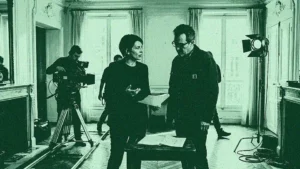
The unit production manager role is sharpest where logistics are densest, and that is exactly the Media and Entertainment context: scripted shoots, commercials, and increasingly live events that borrow the same crew-and-vendor structure. On a Parisian feature shoot, the UPM juggles location permits for Haussmann apartments, the load-in of lighting and grip trucks on narrow streets, accommodation for a travelling crew, and a supplier chain spanning sets, costumes and post-production. Each of these is a cost line and a schedule risk at the same time.
Film and television shoots
On a shoot, the UPM is the person who confirms that the camera, grip and electric departments can all load in within the window booked for a location, that transport is staged correctly, and that the studio’s spend stays inside the agreed envelope. The same role increasingly tracks environmental data: energy use on stages, crew travel and the carbon footprint of the supplier chain are now part of production reporting for media groups subject to extra-financial obligations such as the CSRD. A UPM who can pull accurate logistics data also holds most of the data a sustainability report needs.
Live events and festivals
In live events, festivals and corporate productions, the equivalent of the UPM coordinates on-site power, the mobility of crews and audiences, local vendors and waste management. The rhythm is faster and the margin for error thinner, because there is rarely a second take. Centralised scheduling and a single source of truth for who is where, doing what, become decisive.
This is where Ooviiz fits the UPM workflow directly. Ooviiz centralises the planning and coordination of crews for productions and events, replacing spreadsheets and informal exchanges with a dedicated platform: real-time availability, mission offers sent from the tool, and electronic contracts signed in the same interface. For a UPM managing dozens of people across departments, that consolidation removes the most error-prone part of the day.
Conclusion
The unit production manager turns a budget into a working production, controlling below-the-line spend, building the schedule, negotiating deals and keeping every department aligned from pre-production through wrap. It is a role defined by logistics, financial discipline and constant communication, sitting between the line producer above and the production coordinator below. As media groups face tighter reporting obligations and productions grow more complex, the UPM increasingly works through dedicated software that centralises crew, schedule and contract data in one place. Mastering both the craft and the tools is what makes a unit production manager indispensable on a modern set.
FAQ
What does a unit production manager do?
Who does a unit production manager report to?
What is the difference between a UPM and a line producer?
How much does a unit production manager earn?
What skills does a unit production manager need?
Going further with TheGreenShot
The breadth of the unit production manager role, from scheduling to vendor deals to daily crew coordination, is exactly where a dedicated platform earns its place. Ooviiz centralises crew planning and coordination for productions and events, giving UPMs a single source of truth instead of scattered spreadsheets and informal messages. It manages availability in real time, sends mission offers directly from the platform, and generates electronic contracts signed in the same interface. For a manager juggling dozens of people across departments, that consolidation removes the most error-prone part of every day and frees time for the budget and schedule decisions that actually need a human. Teams curious about how this works in practice can explore a tailored walkthrough of the tool.
Our carbon experts help production studios frame strategy, train teams and track results, tailored to operational constraints.