A typical three-day music festival generates around 500 tonnes of carbon emissions, roughly 5 kilograms of CO2 per person per day [1]. The carbon footprint of live events has moved from a reputational afterthought to a planning priority for festivals, concerts and corporate gatherings. Most of that footprint sits outside the organiser’s direct control, in audience travel, artist logistics and the supply chain, which makes it both hard to see and hard to reduce without a method. This article explains where event emissions come from, how to measure them with recognised approaches, and which levers deliver the biggest reductions.
Open the calculator ↓
Why the carbon footprint of live events matters
Events concentrate a large amount of activity into a short window: thousands of people travelling to one place, temporary power infrastructure, catering at scale and tonnes of single-use material. The averages reveal the spread. The typical music festival in the United States emits an estimated 228 metric tons of CO2, but individual events vary widely, with some large festivals exceeding 800 metric tons [2].
The pressure to act is rising on two fronts. Audiences and sponsors increasingly expect a credible environmental position, and public authorities are tightening the conditions attached to permits and subsidies. Measuring the carbon footprint of live events is the prerequisite for both: without a baseline, neither reduction targets nor communication hold up. The same logic that governs the environmental impact of the music industry applies across the wider events sector.
Where live event emissions come from
The dominant share falls into Scope 3, the indirect emissions generated across the event’s value chain. This category covers audience travel, artist flights, food suppliers, haulage and merchandise production [3]. Travel is consistently the largest single contributor, since fans often travel long distances and performers may fly between cities daily.
On-site energy is the second major bucket. For a typical music festival, the energy consumed by the show breaks down to roughly 54 percent for lighting, 27 percent for video equipment and 19 percent for audio [2]. Diesel generators powering temporary sites add a heavy load. Waste and catering complete the picture: food, packaging and the short lifespan of event infrastructure all leave a measurable trace.
| Emission category | What it includes |
|---|---|
| Audience and artist travel | Fan transport, artist flights and tour logistics |
| On-site energy | Generators, lighting, video and audio systems |
| Supply chain | Food suppliers, haulage, merchandise production |
| Waste and catering | Single-use packaging, food waste, temporary structures |
| Accommodation | Hotel nights for crew, artists and visitors |
How to measure the footprint of an event
Credible measurement follows the GHG Protocol, which organises emissions into direct (Scope 1), energy-related (Scope 2) and value-chain (Scope 3) categories. For events, the bulk of the footprint sits in Scope 3, so the quality of a measurement depends heavily on how well travel, supplier and catering data are captured. Specialised event carbon calculators apply these principles to festivals and conferences, but they are only as accurate as the inputs they receive.
The practical difficulty is gathering data from many independent actors: ticketing systems for attendance, transport surveys for audience travel, energy meters or generator fuel logs for power, and supplier invoices for catering and logistics. Organisers who treat measurement as a one-off spreadsheet struggle to repeat it year after year. A structured understanding of how the GHG Protocol defines each scope helps decide which data to prioritise and where estimates are acceptable.
Levers to reduce event emissions
Because travel dominates, the highest-impact levers target mobility. Choosing venues served by public transport, incentivising shared and low-carbon travel, and building tour routing that minimises artist flights all attack the largest category. On-site, replacing diesel generators with grid connections, batteries or renewable power cuts a substantial share of direct emissions, and LED lighting with smart energy management reduces the show load.
Waste and catering offer visible wins: reusable cup systems, local and plant-forward food sourcing and comprehensive waste segregation move events toward zero-waste-to-landfill targets. Industry initiatives have shown what is achievable at scale, with coalitions of more than 40 festivals committing to halve their carbon emissions and double their recycling [3]. These measures depend on first knowing the baseline, which is why measurement and reduction are inseparable.
From measurement to action on site
The gap between a reported footprint and a real reduction is closed on the ground, where data has to be captured while the event is being built and run.
Live events and festivals
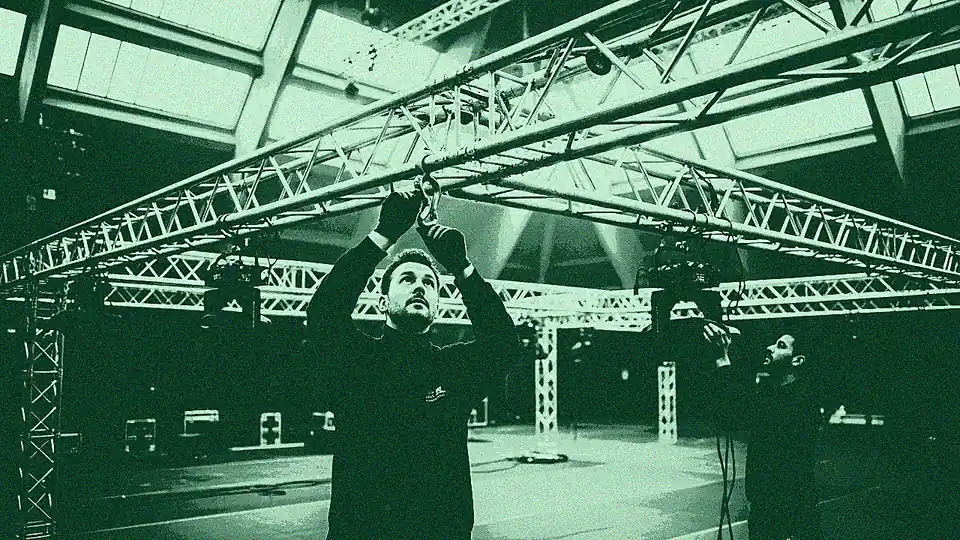
On an event site, emissions are scattered across dozens of suppliers and a compressed timeline: a power contractor logging generator fuel, a catering partner sourcing food, a haulage firm moving stage and rigging, and a ticketing platform holding the audience-travel data. Capturing each of these in a consistent way is what turns a festival footprint into an auditable figure rather than an estimate. Organisers that build this into operations can target the right levers, since lighting alone can represent over half of the on-site energy load. The same discipline that the audiovisual sector applies to shoots transfers directly to events.
Audiovisual productions
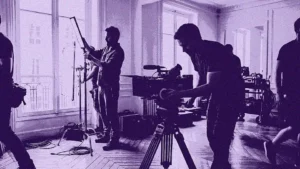
Productions and events share a structure: temporary infrastructure, mobile teams and a dense supplier chain. A measurement system that spans both lets media groups and event organisers compare projects on the same basis, rather than maintaining separate methods. This is increasingly relevant as the same teams move between film, television and live formats.
GreenPro, the carbon tracking tool from TheGreenShot, automates data collection for events and productions, turning operational records into reports aligned with the GHG Protocol and recognised event methodologies, without manual entry. Learn more about GreenPro.
Estimate the carbon footprint of your shoot or event
Putting these principles into numbers is the fastest way to see where a project’s emissions concentrate. The free TheGreenshot estimator below breaks a production or event down item by item (transport, energy, meals, purchases, waste), following the audiovisual eco-production methodology and ADEME factors.
Conclusion
The carbon footprint of live events is large, concentrated and dominated by indirect emissions, especially audience travel and the supply chain. Measuring it credibly means following the GHG Protocol and capturing data from many independent actors, while reducing it means attacking mobility, on-site energy, waste and catering in that order of impact. As permits, sponsorships and audience expectations increasingly hinge on environmental performance, organisers who establish a reliable baseline and track it consistently will be best placed to set targets that hold. The decisive move is shifting from annual spreadsheets to continuous, structured measurement.
FAQ
What is the average carbon footprint of a live event?
What is the biggest source of emissions at an event?
How is the carbon footprint of an event measured?
How can organisers reduce an event’s carbon footprint?
Why is most of an event’s footprint outside the organiser’s control?
Going further with TheGreenShot
Reducing the carbon footprint of live events begins with seeing it clearly, and that is where GreenPro, the carbon tracking tool from TheGreenShot, proves its value. It pulls together the scattered data that defines an event footprint, from generator fuel and energy meters to catering invoices and travel records, and classifies each entry against recognised methodologies and the GHG Protocol using OCR and an AI carbon engine. Organisers move from a once-a-year estimate to real-time dashboards that follow the event from build to teardown, with reports that withstand scrutiny from sponsors and authorities. Teams curious about how this fits their own festivals or corporate events can explore a tailored walkthrough.
Our carbon experts help production studios frame strategy, train teams and track results, tailored to operational constraints.