Post-production is the phase where raw footage is transformed into a finished film, series, or content piece. It encompasses everything that happens after principal photography wraps: picture editing, sound design, visual effects, colour grading, and final delivery. For feature films and high-end drama series, post-production can last from several months to over a year. For episodic TV and commercial content, compressed timelines and parallel workflows are the norm. Understanding the post-production workflow, its phases, the roles involved, and the project management tools that keep it on track is essential for any production team operating at scale. Studies show that 65% of production teams now use cloud-based post-production workflows [1], reflecting the increasing complexity and geographic distribution of post teams.
What is post-production?
Post-production is the third and final major phase of the filmmaking process, following development and pre-production, and principal photography. It is the phase during which all creative and technical elements captured during the shoot are assembled, refined, and prepared for delivery to broadcasters, distributors, or streaming platforms.
The post-production workflow is rarely linear. Multiple departments work simultaneously and interdependently: editors build the picture cut while sound editors prepare dialogue and effects tracks, VFX teams create digital elements, and composers develop the score. Assets flow between departments continuously, with feedback loops between the director, producers, and each specialist team. This parallel workflow structure makes project management a critical function in post-production, not an administrative afterthought. TheGreenShot’s production management platform supports the coordination of multi-department workflows across production and post-production phases.
The phases of post-production
While post-production varies by project type and scale, the core phases follow a broadly consistent sequence.
Picture editing
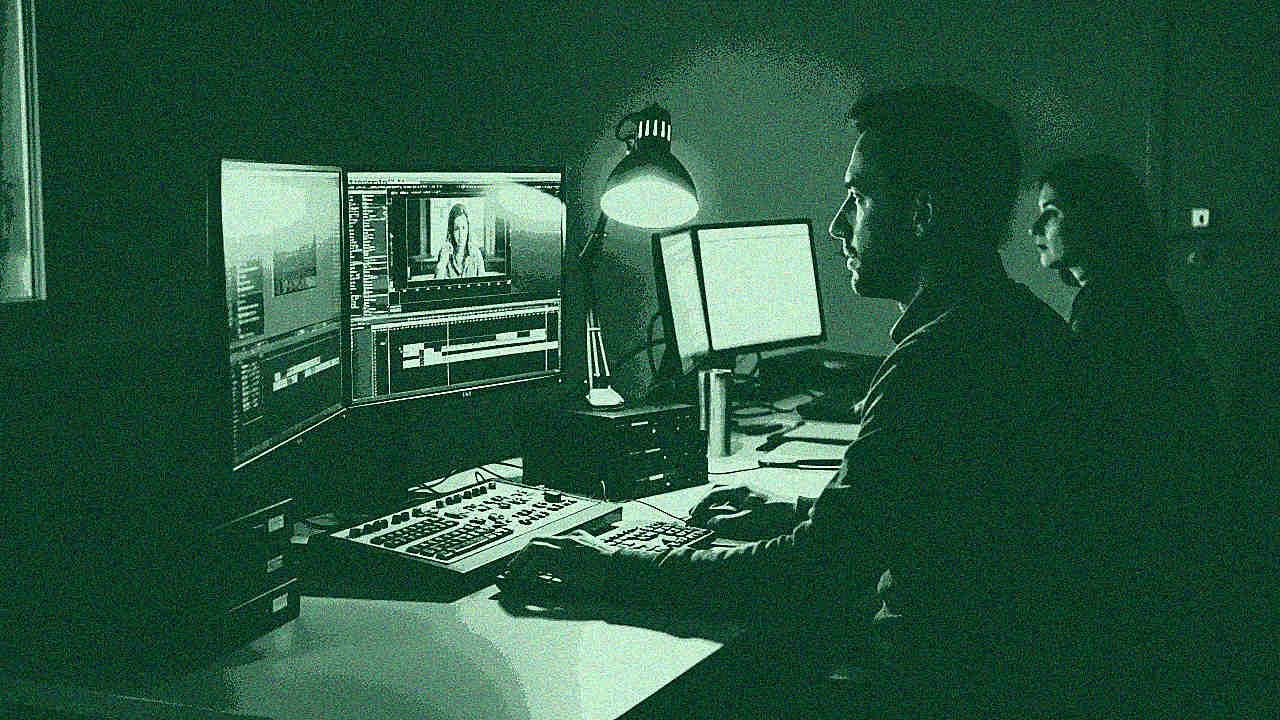
Picture editing is the first and longest post-production phase. The editor and assistant editors ingest all raw footage, organise it, and begin building the assembly cut, which places every shot in rough chronological order. The rough cut follows, where the editor and director make the first real structural decisions, establishing the film’s overall shape. Successive iterations refine the cut toward the fine cut and ultimately the picture lock, the point at which the edit is declared final and no further changes will be made to the picture [2].
For feature films, the editing process alone can span six months to a year. For episodic TV with compressed delivery schedules, episodes may be edited concurrently by multiple cutting rooms, with the supervising editor maintaining overall stylistic and narrative consistency across the series.
Sound post-production
Sound post-production runs in parallel with picture editing and is typically divided into several distinct disciplines. Dialogue editing cleans and organises all production sound recordings. Automated Dialogue Replacement (ADR) re-records lines that were unusable due to noise or performance issues. Foley records synchronous sound effects to replace or supplement location sound. Sound effects editing builds the environmental and effect soundscape. Music editing places temp and final score against picture. The re-recording mix brings all these elements together into the final stereo, 5.1, or Atmos mix delivered to the distributor [3].
Visual effects
VFX work begins during principal photography with on-set supervision and continues through post-production. Once picture is locked, VFX shots are confirmed and finalled. The VFX pipeline involves multiple disciplines including compositing, 3D animation, motion capture cleanup, environment creation, and digital matte painting. For productions with heavy VFX, this phase can be the longest and most resource-intensive in post.
Colour grading
Colour grading is the creative and technical process of establishing the visual look of the finished film. It follows picture lock and is divided into two stages: colour correction, which ensures consistency and accuracy across all shots, and creative colour grading, which establishes the tonal and mood qualities of the image. For streaming and theatrical releases, the grade is delivered in multiple formats including HDR and SDR versions calibrated to different viewing environments [4].
Deliverables and distribution
The final phase of post-production involves creating and delivering all required formats for the distribution chain. This includes picture files in multiple resolutions and formats, audio tracks in multiple languages and formats, subtitles and closed captions, and metadata packages for platform ingestion. Delivery requirements vary by distributor, broadcaster, and territory, making a clear deliverables schedule an essential component of post-production planning from the outset.
Key roles in post-production
Post-production involves a wide range of specialised roles, each responsible for a distinct component of the workflow.
The post-production supervisor is the central project management role, responsible for coordinating all post departments, managing the schedule and budget, and maintaining communication between the production office and the post team. The film editor and their cutting room team build and refine the picture cut in collaboration with the director. The VFX supervisor oversees the integration of all visual effects elements into the picture. The sound supervisor or supervising sound editor manages all aspects of sound post. The colourist executes the grade under the direction of the director of photography. The composer creates the original score.
On larger productions, each of these roles leads a team of additional specialists. The post-production supervisor must coordinate the handoffs and dependencies between all these teams, ensuring that the right assets reach the right department at the right time. This coordination challenge makes robust project management tools indispensable for productions of any significant scale [5].
Project management in post-production
Post-production project management is the discipline of planning, tracking, and coordinating the delivery of all post-production work on time and within budget. It differs from general project management in the specificity of its workflows, the volume of assets managed, and the interdependency of its specialist departments.
Scheduling and milestone tracking
A post-production schedule maps all major milestones from the first assembly cut through to final delivery. Key milestones include picture lock, VFX conforms, music and effects spotting sessions, sound mix dates, grading sessions, and delivery deadlines. Delays at any one milestone cascade through subsequent phases, so tracking is continuous rather than periodic. Post-production supervisors typically maintain a master schedule in a dedicated project management tool, updated daily during active phases of work.
Asset management and version control
Post-production generates thousands of files across picture, sound, VFX, and music. Managing version control, ensuring that editors are working with the latest conforms, and tracking which VFX shots are at which stage of completion requires systematic asset management. Productions without a clear naming convention and version control protocol frequently lose time to confusion over which file is current.
Communication and review workflows
Directors, producers, broadcasters, and distributors all provide feedback on post-production work at different stages. Managing this feedback efficiently requires a clear review and approval workflow, with dedicated platforms for sharing cuts, tracking comments, and confirming sign-offs. Cloud-based review tools have become standard for productions with geographically distributed teams or international co-productions. Production management software features supporting review workflows are increasingly integrated with scheduling and crew coordination tools.
Post-production tools and software
The post-production ecosystem relies on a combination of creative software, asset management platforms, and project management tools [6].
For picture editing, Avid Media Composer remains the standard for long-form drama and feature films, while Adobe Premiere Pro is widely used for commercial, documentary, and streaming content. DaVinci Resolve is increasingly adopted for both editing and colour grading, particularly by independent productions. For colour, DaVinci Resolve and Baselight are the dominant professional platforms. For sound, Pro Tools is the industry standard at every level of production.
For VFX, the pipeline typically includes Autodesk Maya, Houdini, Nuke, and Adobe After Effects at various stages. For project management and review, Frame.io, ftrack Studio, and ShotGrid (formerly Shotgun) are widely used for tracking VFX deliveries and managing review workflows across distributed teams. For crew coordination in post, Ooviiz manages the scheduling and booking of external activity in a single space, covering the coordination of editors, colourists, sound editors, and other post-production specialists engaged on a project.
Post-production in film, TV, and live events
The post-production workflow differs significantly between long-form film and television, and between scripted drama and live event content.
Film and TV post-production
Feature film post-production typically operates on a single-stream model: one cutting room, one director, one delivery. This allows for a relatively linear progression through the phases, even if individual departments work in parallel. The post-production supervisor tracks progress against a master delivery date, adjusting department schedules as needed to absorb delays without compromising the final deadline.
Television post-production, particularly for returning series, is more operationally complex. Multiple episodes are typically in post simultaneously at different phases: one episode may be in picture lock while another is still in the assembly cut stage, and a third is in sound mix. This parallel workflow requires the post-production supervisor to manage multiple cutting rooms, VFX deliveries, and sound bookings concurrently. The risk of resource conflicts between episodes is significant, particularly for specialist roles like the colourist or re-recording mixer who may be shared across episodes.
Productions managed through Ooviiz can coordinate post-production bookings for editors, graders, sound teams, and other external specialists alongside principal photography crew, maintaining a unified view of all resource commitments across the full production timeline. This reduces the risk of double-booking specialist post-production talent across concurrent episodes or projects.
Live events and hybrid productions
Live event recordings and hybrid productions combine elements of traditional post-production with the time pressure of broadcast delivery. Awards shows, concerts, and corporate events captured for broadcast or streaming require rapid turnaround: editorial, mixing, and colour may need to be completed within hours or days rather than weeks. This compressed post-production model requires pre-planned workflows, pre-loaded project templates, and pre-confirmed specialist bookings before the event takes place.
Multi-camera event recordings generate large volumes of footage that must be ingested, synced, and organised before editorial can begin. Productions working at this pace benefit from post-production coordinators who manage the asset pipeline in parallel with the event itself, ensuring that footage is organised and ready for editorial as soon as the event concludes. Coordination between the live production team and the post team must be established before the event, not after.
Ooviiz centralises the planning and coordination of teams for productions and events, replacing spreadsheets and informal exchanges with a dedicated platform. Discover Ooviiz
Conclusion
The post-production workflow is the phase where a production’s creative vision is realised and prepared for its audience. Understanding its phases, roles, and project management requirements is essential for any production team aiming to deliver on time and within budget. As cloud-based collaboration tools become standard and post-production timelines compress across all content types, the operational discipline of post-production project management becomes increasingly central to commercial success. Productions that invest in clear workflows, purpose-built tools, and well-coordinated specialist bookings consistently outperform those that rely on informal coordination and reactive problem-solving.
FAQ
What are the main phases of post-production?
How long does post-production take for a film or TV series?
What does a post-production supervisor do?
What software is used in post-production?
What is picture lock in post-production?
Go further with TheGreenShot
Managing a post-production workflow across multiple departments, specialist freelancers, and concurrent episodes requires more than a shared calendar. Ooviiz, TheGreenShot’s crew planning platform, provides production managers and post-production supervisors with a centralised system for scheduling and coordinating all specialist roles: editors, colourists, sound editors, VFX coordinators, and external post facilities. Availability is managed in real time, mission offers are sent directly from the platform, and electronic contracts are generated and signed within the same interface. For productions handling multiple episodes or projects simultaneously, Ooviiz provides the visibility and control needed to avoid resource conflicts and keep deliveries on track. A personalised walkthrough for post-production teams is available on request.
Our carbon experts help production studios frame strategy, train teams and track results, tailored to operational constraints.