ISO 20121 is the international standard for sustainable events, and it has quietly become the reference framework for any organisation that wants to prove an event was managed responsibly rather than simply marketed as green. First developed for the London Olympic Games and since adopted by gatherings as large as the Paris Olympics [1], the standard gives festivals, conferences, broadcasts and corporate events a structured way to manage their social, economic and environmental impact. This article explains what ISO 20121 covers, what the certification process involves, why a growing number of event organisers and producers adopt it, and how it applies specifically to film, television and live event work.
Open the calculator ↓
What ISO 20121 is and where it came from
ISO 20121 is an event sustainability management system standard. Rather than prescribing a fixed list of green actions, it defines a management framework that an organisation builds around its own events to identify, control and improve their impacts over time. It applies to events of every type and size, from a fifty-person meeting to a multi-day outdoor festival, and it can be implemented by event organisers as well as by service providers such as caterers, venues and staging companies [2].
The standard emerged from the London Olympic Games, where organisers needed a credible way to embed sustainability into the planning of an enormous, temporary event. Its latest revision broadened the scope considerably, adding stronger emphasis on social legacies, inclusivity, climate change mitigation and adaptation, circular economy principles, biodiversity, human rights and contribution to the United Nations Sustainable Development Goals [2]. This evolution reflects how sustainable events have widened from a narrow focus on waste and energy toward a fuller view of impact. Organisations new to the topic can pair the standard with a clear understanding of how greenhouse gas emissions are measured, since climate performance sits at the heart of the framework.
What the standard actually requires
ISO 20121 is built on the Plan-Do-Check-Act methodology common to ISO management systems, which means it asks organisations to set objectives, act on them, measure results and improve continually [3]. In practice the requirements cover a recognisable sequence of obligations.
An organisation must understand its context and the expectations of interested parties, demonstrate leadership commitment and publish a sustainability policy, then plan through objectives and a proper assessment of its event impacts. It must provide resources and develop staff competence, implement operational controls across the full event lifecycle, monitor performance through defined indicators, run internal audits and management reviews, correct nonconformities, and improve sustainability performance across successive editions of an event [2]. The emphasis on successive editions matters: ISO 20121 is designed for organisations that run events repeatedly and want each one to outperform the last.
| Requirement area | What it involves | Why it matters |
|---|---|---|
| Context and stakeholders | Map interested parties and their expectations | Grounds the system in real impacts |
| Leadership and policy | Senior commitment and a published policy | Prevents sustainability becoming a side project |
| Planning and objectives | Impact assessment and measurable targets | Turns intent into accountable goals |
| Operational control | Controls across the event lifecycle | Manages impact where it occurs |
| Monitoring and measurement | Indicators and performance tracking | Provides evidence rather than claims |
| Audit and improvement | Internal audits and corrective action | Drives gains edition after edition |
The certification process step by step
One reason ISO 20121 has spread so widely is that it offers several ways to demonstrate conformity rather than a single expensive route. An organisation can use self-declaration, validation by a second party such as a client or supplier, or full third-party certification by an accredited body [3]. This flexibility makes the standard attainable for smaller organisations that could not justify the cost of formal certification, while still allowing major events to pursue the most rigorous independent verification.
Third-party certification typically follows a familiar path: building the management system, running it through at least one event cycle to generate evidence, then undergoing a documentation review and an on-site audit by a certification body. Successful audits lead to a certificate maintained through periodic surveillance audits and renewed through recertification. Organisations holding earlier versions of the standard transition to the current revision through their normal audit cycle. Throughout, robust data collection is essential, because auditors look for measured performance rather than good intentions, which is where strong measurement tools for events and productions earn their place.
Why organisations pursue ISO 20121
The case for ISO 20121 combines reputational, operational and commercial benefits. Certification signals credibility, helping organisers counter accusations of greenwashing by replacing vague claims with an audited management system. It also tends to reduce costs, since the discipline of measuring and controlling impacts surfaces savings in energy, waste, transport and procurement [4].
Commercially, the standard is increasingly a condition of doing business. Public tenders and large corporate clients often require demonstrable event sustainability, and a recognised certificate can be the difference between winning and losing a contract. High-profile adopters illustrate the trend, with major festivals and global events building their planning around the framework [1]. Beyond compliance, many organisations value the way the standard structures continual improvement, giving teams a repeatable method to raise their performance with each edition rather than starting from scratch every time.
ISO 20121 for productions and live events
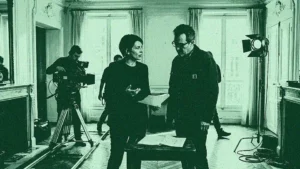
ISO 20121 was born in the events world, so its relevance to live events is direct, but it also reaches into film and television production where temporary, high-intensity gatherings share many of the same impacts.
Live events and festivals
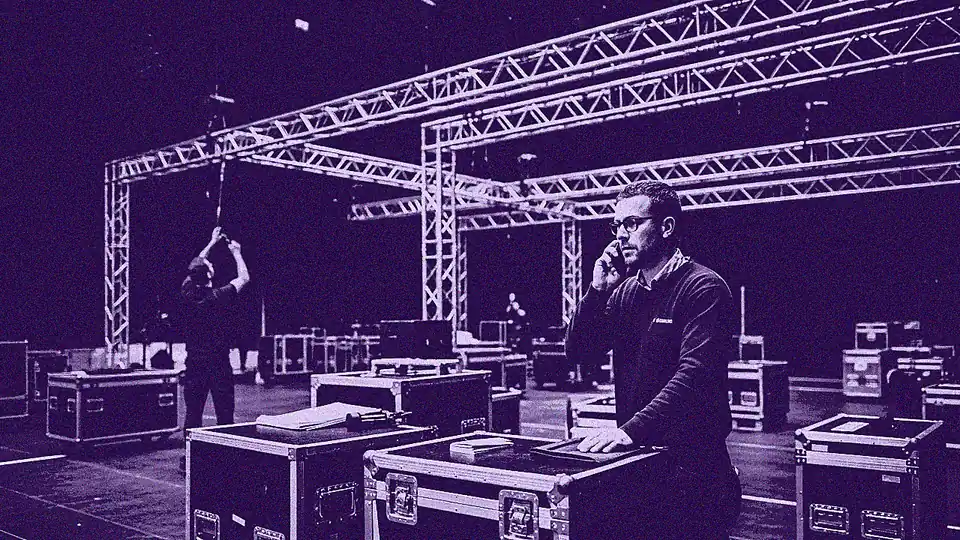
For festivals, concerts and corporate events, ISO 20121 maps neatly onto the realities of a temporary site. The biggest impacts cluster around on-site power, audience and crew mobility, local procurement, waste and accommodation, and the standard pushes organisers to assess and control each one across the event lifecycle. Its flexible conformity options matter here because the events sector is full of small and medium organisers who need a credible framework without prohibitive cost. Large festivals and global broadcasts that have adopted the standard demonstrate that it scales from modest gatherings to events with hundreds of thousands of attendees [1]. Teams coordinating these events also benefit from tools that keep crew planning and logistics organised, an area covered by TheGreenshot scheduling solution Ooviiz.
Film and television production
A shoot resembles a travelling event: a temporary mobilisation of crew, energy, transport and suppliers concentrated into a short window. While productions more often use screen-specific carbon schemes, the management discipline of ISO 20121 translates well, especially for production companies that also stage premieres, launches and promotional events. The common thread is measurement, since both events and productions need defensible data on energy and travel before they can claim any sustainability achievement. TheGreenshot covers the underlying breakdown in its guide to the carbon emission scopes of an audiovisual production.
GreenPro, the carbon tracking tool from TheGreenshot, automates data collection for productions and events, turning scattered records into certified CO2 reports aligned with the GHG Protocol and the measurement expectations of standards such as ISO 20121, without manual entry. Learn more about GreenPro.
Estimate the carbon footprint of your shoot or event
Putting these principles into numbers is the fastest way to see where a project’s emissions concentrate. The free TheGreenshot estimator below breaks a production or event down item by item (transport, energy, meals, purchases, waste), following the audiovisual eco-production methodology and ADEME factors.
Conclusion
ISO 20121 has established itself as the credible backbone of sustainable events, giving organisers a structured management system rather than a checklist of green gestures. Its strength lies in the combination of a recognised Plan-Do-Check-Act framework, flexible routes to demonstrate conformity, and a scope broad enough to cover climate, social and economic impact across the full event lifecycle. As public tenders and corporate clients increasingly demand audited sustainability, ISO 20121 is shifting from a competitive advantage toward a baseline expectation. For festivals, broadcasters and production companies alike, the organisations that build the standard into their planning, supported by reliable measurement, will be best positioned as scrutiny of events continues to intensify.
FAQ
What is ISO 20121?
How does an organisation get ISO 20121 certified?
What are the benefits of ISO 20121 certification?
Is ISO 20121 only for large events?
How does ISO 20121 relate to carbon measurement?
Going further with TheGreenshot
ISO 20121 lives or dies on data: auditors want measured performance, not promises, and that is where most event teams struggle. GreenPro, the carbon tracking solution from TheGreenshot, was built for the temporary, high-intensity nature of events and productions. It automates data collection through invoice scanning and OCR, centralises energy, travel and supplier records, and produces real-time dashboards with AI-generated insights. The result is a certified, audit-ready footprint aligned with the GHG Protocol and the monitoring expectations of standards such as ISO 20121, assembled without the manual spreadsheets that rarely survive an event cycle. Organisers who want to see how automated measurement supports certification can explore a tailored walkthrough of the tool.
Our carbon experts help production studios frame strategy, train teams and track results, tailored to operational constraints.