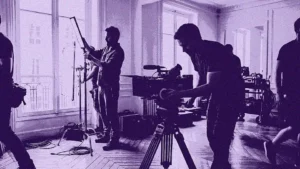

Carbon accounting in the creative industries has moved from a voluntary gesture to an operational discipline that shapes how films, broadcasts and events are budgeted and produced. The practice of measuring greenhouse gas emissions, once reserved for heavy industry, now sits alongside financial tracking as a key performance indicator on many productions. A single tentpole feature film can generate thousands of tonnes of CO2 equivalent across its lifecycle [3], and clients, broadcasters and regulators increasingly expect that figure to be measured rather than estimated. This article explains how carbon accounting works in creative production, which frameworks govern it, where emissions concentrate, and how studios and event organisers can build reliable measurement into their workflows.
Open the calculator ↓
What carbon accounting means for the creative industries
Carbon accounting is the systematic measurement of the greenhouse gases produced, directly or indirectly, by an organisation or a project. For the creative industries, this translates into quantifying the emissions generated across a production lifecycle, from script development and pre-production through shooting, post-production and distribution. The output is a carbon footprint expressed in tonnes of CO2 equivalent, a unit that converts every greenhouse gas into a common metric.
The creative sector occupies an unusual position. Its physical footprint can appear modest next to manufacturing or transport, yet its projects are intensely resource-heavy for short, concentrated periods. A shoot mobilises crew, vehicles, generators, catering and set construction in a matter of weeks, then disperses. This project-based rhythm makes carbon accounting both essential and methodologically tricky, because emissions must be captured quickly and attributed accurately to a temporary undertaking rather than a stable site. The broader path to net zero for the creative industries has been mapped in dedicated research, underlining that the sector carries real climate responsibility despite its intangible reputation [6]. Organisations that want to understand the full breakdown can start with TheGreenshot guide to the carbon emission scopes of an audiovisual production.
The frameworks behind creative-sector carbon accounting
Reliable carbon accounting depends on a shared methodology, and the dominant reference is the Greenhouse Gas Protocol. The GHG Protocol provides internationally recognised standards for measuring and reporting emissions and remains the most widely used framework worldwide [2]. It organises emissions into three scopes: scope 1 for direct emissions from owned or controlled sources such as generators and company vehicles, scope 2 for purchased electricity and heat, and scope 3 for everything else across the value chain.
For creative organisations, scope 3 is where most of the footprint sits. Across sectors, value-chain emissions typically represent between seventy and ninety percent of a company total [5], and production work is no exception given its reliance on freelancers, suppliers, travel and rented equipment. A detailed explanation of how the three scopes map onto shoots is available in TheGreenshot breakdown of the GHG Protocol applied to production.
Sector-specific calculators
Generic corporate tools rarely capture the specifics of a film set or a festival, so the creative industries have developed dedicated calculators. Tools such as Albert, Carbon’Clap and Peach Pear Plum estimate a production footprint using recognised methodologies including the GHG Protocol and Bilan Carbone [1]. These calculators translate production realities, such as shoot days, location moves and equipment hire, into emissions data. TheGreenshot maintains a comparison of the main carbon calculators used in audiovisual to help producers select the right one.
Regulation tightens the requirements
Carbon accounting is increasingly mandated rather than optional. Under the EU Corporate Sustainability Reporting Directive, in-scope companies must disclose scope 1, 2 and 3 emissions following GHG Protocol methodology, with scope 1 and 2 required from the first reporting year and scope 3 phased in thereafter [5]. A move toward harmonisation is also under way, with the International Organization for Standardization and the GHG Protocol formalising a partnership to align rules with the ISO 14064 standard and reduce fragmentation across carbon accounting frameworks [4].
Where creative emissions actually come from
Effective carbon accounting requires knowing which activities dominate the footprint, because measurement effort should follow material impact. In screen production, two categories consistently lead. Electricity and fuel account for more than half of an average production total emissions, while transport is responsible for roughly thirty percent of a typical shoot [3]. Together these two areas usually represent the bulk of what a creative project emits.
| Emission source | Typical scope | Relative weight | Accounting priority |
|---|---|---|---|
| Generators and on-set fuel | Scope 1 | High | Primary, metered where possible |
| Studio and venue electricity | Scope 2 | High | Primary, from utility data |
| Crew and talent travel | Scope 3 | High | Primary, often underestimated |
| Accommodation and catering | Scope 3 | Medium | Secondary |
| Set construction and materials | Scope 3 | Medium | Secondary |
| Post-production and data storage | Scope 3 | Lower but rising | Emerging priority |
The practical lesson is that accurate carbon accounting starts with energy and mobility data. Productions that capture fuel logs, utility bills and travel records well can produce a defensible footprint even before refining the smaller categories. TheGreenshot offers a practical overview of the main levers to cut an audiovisual production footprint once the measurement baseline exists.
Common obstacles to accurate carbon accounting
Despite better tools, creative organisations still face real barriers. The most persistent is scope 3 data quality. Estimating value-chain emissions accurately remains difficult across the economy, and only a small minority of companies report having the capacity to do so reliably [7]. Because scope 3 dominates the creative footprint, this gap matters more here than in many other sectors.
A second obstacle is the perception that measurement is costly or technical. Crew members sometimes assume carbon tracking demands advanced systems or time-intensive training, which can stall adoption even when the underlying data already exists in call sheets, invoices and travel bookings. The third challenge is the temporary nature of productions: data is generated in a burst and dispersed quickly, so without a collection routine built into the workflow, the information is lost once the shoot wraps. Addressing these obstacles is less about technology and more about embedding carbon accounting into existing production administration, so that measurement becomes a by-product of normal record-keeping rather than a separate task.
Carbon accounting in film, TV and live events
The creative industries split into two operational worlds with distinct carbon accounting profiles, and both reward a sector-specific approach rather than a generic corporate template.
Film and television production
On a shoot, the footprint is concentrated and supplier-heavy. Carbon accounting must reach across a fragmented chain of vendors covering camera and lighting hire, set construction, costume, transport and post-production. The standout categories remain energy and travel, with generator fuel, studio electricity and crew movement driving the majority of emissions. Sector frameworks such as Albert have become a practical backbone here, with thousands of productions registering their carbon footprints and pursuing certification through the scheme each year [1]. For groups large enough to fall under CSRD, production emissions also feed directly into corporate disclosures, raising the stakes for accuracy. The challenge on set is rarely willingness; it is capturing supplier data fast enough during a compressed schedule.
Live events and festivals
Events shift the emphasis toward on-site power, audience and crew mobility, local suppliers, waste and accommodation. A festival or large corporate event concentrates energy use and travel into a few days, often on a temporary site with diesel generators and significant attendee movement. Here carbon accounting depends on capturing power consumption, contractor activity and travel patterns during a brief, high-pressure window. The same principle applies as in screen work: the footprint is dominated by energy and mobility, so measurement effort should start there before refining catering, waste and accommodation figures.
GreenPro, the carbon tracking tool from TheGreenshot, automates data collection for productions and events, turning scattered project records into certified CO2 reports aligned with Albert, CSRD and the GHG Protocol, without manual entry. Learn more about GreenPro.
Estimate the carbon footprint of your shoot or event
Carbon accounting starts with knowing the order of magnitude, and an item-by-item estimate turns the principles above into concrete numbers. The free TheGreenshot estimator below breaks a production or event down item by item (transport, energy, meals, purchases, waste), following the audiovisual eco-production methodology and ADEME factors.
Conclusion
Carbon accounting has become a core competency for the creative industries rather than a compliance afterthought. The discipline rests on a clear methodology in the GHG Protocol, a set of sector-specific calculators that translate production realities into emissions data, and a growing regulatory framework that makes measurement mandatory for many organisations. The footprint is dominated by energy and travel, and by scope 3 emissions that remain the hardest to capture. As reporting standards converge and broadcasters tighten their expectations, creative organisations that embed carbon accounting into everyday production administration will be far better placed than those treating it as an annual scramble. The direction of travel is clear: measured, comparable and auditable emissions data is becoming the price of entry for working at scale.
FAQ
What is carbon accounting in the creative industries?
Which framework should creative productions use to measure emissions?
Where do most emissions in a production come from?
Why is scope 3 so important for creative organisations?
Is carbon accounting mandatory for creative companies?
Going further with TheGreenshot
Carbon accounting only delivers value when the underlying data is reliable, and that is precisely where creative productions struggle. GreenPro, the carbon tracking solution from TheGreenshot, was built for the project-based rhythm of film, television and events. It automates data collection through invoice scanning and OCR, centralises fuel, energy and travel records, and produces real-time dashboards with AI-generated insights. The output is a certified footprint aligned with the GHG Protocol, Albert and CSRD requirements, assembled without the manual spreadsheets that usually break down once a shoot wraps. Teams that want to see how automated carbon accounting fits their workflow can explore a tailored walkthrough of the tool.
Our carbon experts help production studios frame strategy, train teams and track results, tailored to operational constraints.