
Environmental impact analysis is the structured process of identifying, predicting, evaluating and mitigating the environmental effects of a project or activity before major decisions are taken [1]. Far from a bureaucratic formality, it has become a core planning tool that forces decision-makers to weigh environmental consequences alongside cost and schedule. This guide explains what environmental impact analysis covers, walks through the full process from screening to monitoring, reviews the main methods and tools, and sets out the regulatory frameworks that make it mandatory. It also shows how the discipline applies to a sector where temporary sites and mobile teams are the norm: film, television and live event production.
Open the calculator ↓
What environmental impact analysis means
Environmental impact analysis is best understood as a decision-aiding tool rather than a decision-making one. It gathers the evidence needed to judge how a proposed development will affect air, water, soil, biodiversity, communities and climate, then organises that evidence so that choices can be justified and alternatives compared [1]. The term is often used interchangeably with environmental impact assessment, the formal regulatory procedure, but analysis also describes the broader practice of studying environmental effects outside a strict legal filing.
Two features define a credible analysis. First, it happens before commitments are made, so that findings can still change the design. Second, it is systematic: impacts are identified against a documented baseline rather than asserted. This discipline is what separates a genuine environmental impact analysis from a reassuring narrative. For organisations that treat it as a management tool, the analysis feeds directly into operational decisions, which is why many pair it with a dedicated carbon and impact tracking platform rather than a one-off consultant report.
The environmental impact analysis process, step by step
The environmental impact analysis process follows a recognised sequence. While terminology varies between jurisdictions, the logic is consistent across frameworks [2].
| Stage | Purpose |
|---|---|
| Screening | Decide whether a project requires a full analysis at all |
| Scoping | Define which impacts, boundaries and alternatives the study will cover |
| Baseline study | Document the existing environmental conditions before the project |
| Impact prediction | Estimate the nature, scale and likelihood of each effect |
| Mitigation | Design measures to avoid, reduce or offset significant impacts |
| Reporting | Compile the environmental statement for decision-makers and the public |
| Review and decision | Evaluate the study, consult stakeholders and approve or refuse |
| Monitoring | Compare actual impacts against predictions and verify mitigation |
Screening filters out minor projects so that effort concentrates where it matters. Scoping then sets the perimeter, and this is where many analyses succeed or fail: boundaries chosen too narrowly exclude the indirect effects that often outweigh the direct ones [1]. The baseline study is the reference point against which everything is measured, so its quality determines the credibility of the whole exercise. Impact prediction quantifies effects where possible and describes them qualitatively where not, while mitigation applies the familiar hierarchy of avoid, reduce, then offset [3].
The reporting stage produces the environmental statement, a public document that must present significant effects, alternatives considered, mitigation measures and any gaps in knowledge. Crucially, the process does not end at approval. Monitoring closes the loop by checking whether predicted impacts materialised and whether mitigation worked, a step frequently neglected yet essential to learning. Teams that keep live operational data, rather than reconstructing it after the fact, find this final stage far easier to document, which is one reason production and event organisers increasingly rely on centralised planning and coordination tools.
Methods and tools used in environmental impact analysis
A range of methods supports environmental impact analysis, from simple qualitative aids to data-intensive models [1]. Checklists break a project into components such as construction, operation and decommissioning, and list the environmental disturbances associated with each. Interaction matrices, the best known being the Leopold matrix, cross-reference project actions against environmental factors to flag where effects concentrate. Network diagrams trace indirect and cumulative effects through cause-and-effect chains, while geographic information systems map spatial impacts across a territory.
One method deserves particular attention because it bridges project analysis and corporate sustainability: life cycle assessment. Life cycle assessment measures the environmental impact of a product or service across its entire life, from raw material extraction through production, use and disposal [4]. Where a classic environmental impact analysis focuses on a single site or development, life cycle assessment captures effects that happen far upstream or downstream, the very indirect impacts that narrow scoping tends to miss. Combining the two gives a far more complete picture. For impacts that resist measurement, such as landscape quality or social acceptance, expert judgement and structured stakeholder input fill the gap, and a credible analysis is transparent about which figures are modelled and which are estimated.
The regulatory frameworks behind environmental impact analysis
Environmental impact analysis is mandated by law in most developed economies, and its modern form traces back to the United States. The National Environmental Policy Act (NEPA) established the requirement for federal actions, introducing the distinction between a lighter Environmental Assessment and a full Environmental Impact Statement [5]. The model spread internationally and now underpins permitting regimes worldwide.
In the European Union, the EIA Directive (2011/92/EU, as amended by 2014/52/EU) sets out which public and private projects must be assessed, what the environmental statement must contain and how the public must be consulted [6]. A companion Strategic Environmental Assessment Directive extends the same logic upstream to plans, policies and programmes, ensuring that environmental considerations enter decisions before individual projects are even designed. Common criticisms recur across these regimes: analyses can focus on direct, on-site effects while underplaying indirect ones, prediction accuracy is uneven, and the applicant often sets the boundaries of their own study [1]. These limitations explain the growing convergence between project-level analysis and continuous corporate environmental reporting, where a structured environmental strategy turns one-off studies into an ongoing management discipline.
Environmental impact analysis for film, TV and live events
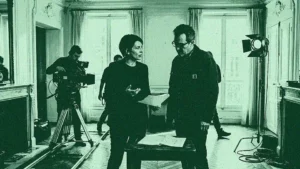
The media and entertainment sector is an unusual subject for environmental impact analysis. Unlike a factory or a road, a production or an event is temporary, mobile and dispersed across many suppliers, which makes impacts harder to bound and easier to overlook. Yet the underlying method transfers directly: define the perimeter, document a baseline, predict effects, mitigate and monitor.
Film and television productions
A shoot concentrates impacts that a standard analysis would recognise instantly: energy use on stages and locations, diesel generators where grid power is unavailable, transport for crew and equipment, and the waste streams generated by sets, costumes and catering. The indirect effects are often larger than the on-site ones, mirroring the central critique of conventional environmental impact analysis [1]. Industry frameworks such as Albert in the United Kingdom and Ecoprod in France translate the general method into production-specific checklists and emission factors, giving teams a practical baseline and a monitoring template. The scoping stage is where a production analysis is won or lost, because transport and the supply chain, the hardest categories to measure, are also the most material.
Live events and festivals
For festivals, concerts and corporate events, environmental impact analysis centres on temporary power supply, the mobility of both staff and audiences, local suppliers, waste management and the footprint of accommodation. A single large event can dominate an organiser’s annual impact, so a site-by-site and supplier-by-supplier baseline is essential to a credible study. Here too, the value lies in data captured as the event is planned and run, not reconstructed from memory once it is over.
GreenPro, TheGreenshot’s carbon tracking tool, automates data collection for productions and events: footprints aligned with Albert, CSRD and the GHG Protocol, with no manual entry. Learn more about GreenPro.
Estimate the carbon footprint of your shoot or event
Putting these principles into numbers is the fastest way to see where a project’s emissions concentrate. The free TheGreenshot estimator below breaks a production or event down item by item (transport, energy, meals, purchases, waste), following the audiovisual eco-production methodology and ADEME factors.
Conclusion
Environmental impact analysis has evolved from a project permitting requirement into a discipline that underpins responsible decision-making across every sector. Its logic is durable: screen, scope, establish a baseline, predict, mitigate and monitor, supported by methods ranging from simple checklists to life cycle assessment. The recurring weaknesses, narrow boundaries and weak monitoring, are precisely the areas where continuous data and sector-specific frameworks make the difference. For film, television and live events, applying environmental impact analysis rigorously is no longer optional: it is how productions anticipate regulation, satisfy broadcasters and clients, and turn environmental scrutiny into a competitive advantage rather than a compliance cost.
FAQ
What is the difference between environmental impact analysis and environmental impact assessment?
What are the main steps of environmental impact analysis?
How does life cycle assessment relate to environmental impact analysis?
Is environmental impact analysis legally required?
How does environmental impact analysis apply to film and event production?
Going further with TheGreenshot
A rigorous environmental impact analysis depends on the quality of the data collected throughout a project. GreenPro, TheGreenshot’s carbon tracking tool, automates that collection by connecting invoices, accounting data and consumption records to build footprints aligned with the GHG Protocol, CSRD and sector frameworks such as Albert. The platform uses automatic invoice recognition, real-time dashboards and AI-assisted insights to turn scattered data into a reliable baseline and monitoring record, the two stages where environmental impact analysis most often falls short. For a production company or an event agency, this automation reduces the administrative burden of each study and makes year-on-year comparison dependable. TheGreenshot’s teams support the set-up of this tracking, from defining the perimeter to reporting the results.
Our carbon experts help production studios frame strategy, train teams and track results, tailored to operational constraints.