
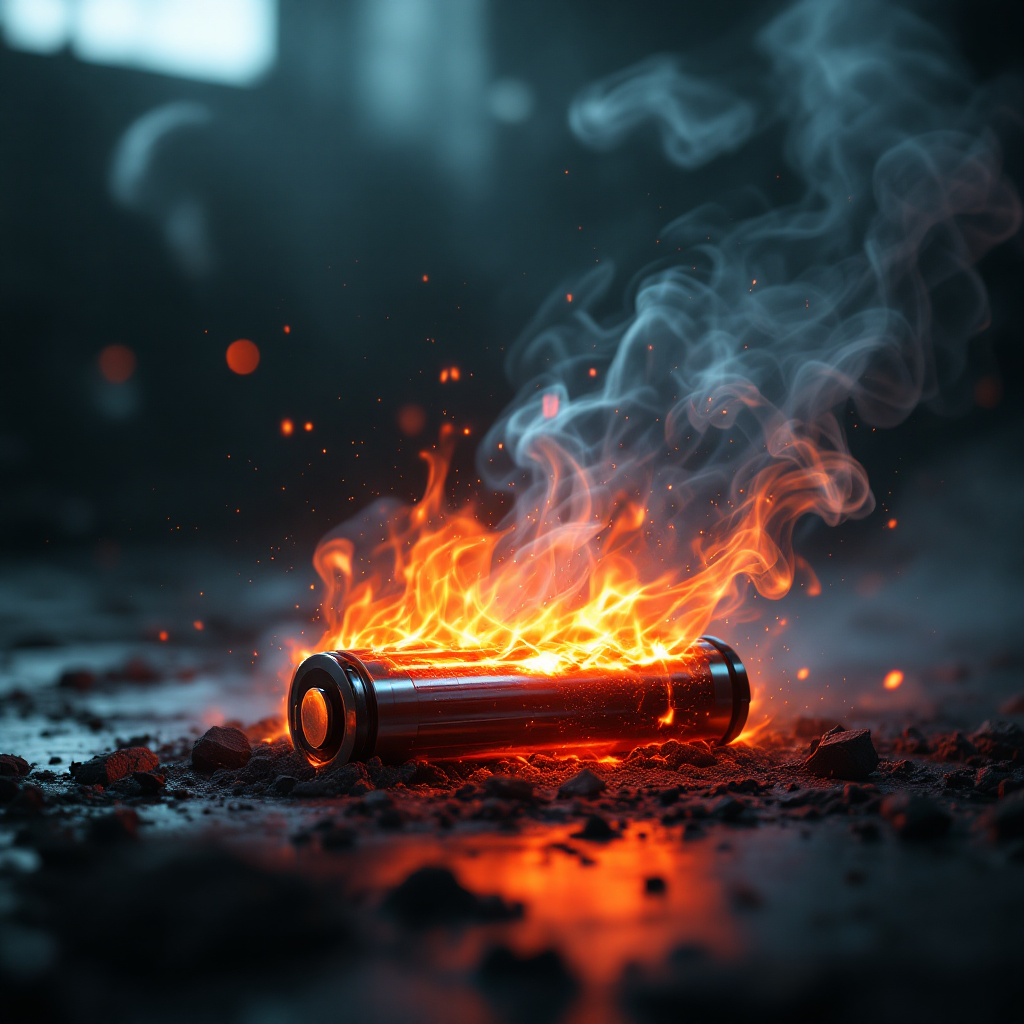
Problems with lithium-ion batteries have reached alarming levels. More than 450 fires across Australia were linked to these power sources over just 18 months. The dangers of lithium batteries extend beyond fire risks. Heat from battery failures can reach up to 400 degrees Celsius in seconds. These lithium-ion battery problems aren’t limited to large-scale incidents. Nine patients required specialized burn treatment after their vaping devices exploded or caught fire in 2023. Understanding why lithium batteries are dangerous is important for anyone who uses smartphones, laptops, electric vehicles, or other battery-powered devices. This piece is about the safety hazards and environmental impacts associated with lithium battery issues. It provides everything you need to know and helps users recognize these hidden risks while learning how to reduce them.
Understanding Lithium-Ion Batteries and Their Uses
What Are Lithium-Ion Batteries?
A lithium-ion battery functions as a rechargeable power source that uses lithium ions moving between electrodes to store and release energy. The technology earned recognition through the 2019 Nobel Prize in Chemistry and acknowledged its effect on modern life [1]. These batteries operate through reversible intercalation of lithium ions into electronically conducting solids.
Every lithium-ion battery comprises four key components. The anode stores lithium ions during charging and is made from graphite. The cathode contains lithium metal oxide materials such as lithium cobalt oxide or lithium iron phosphate. An electrolyte solution or gel aids ion movement between electrodes, while a separator prevents short circuits by keeping the anode and cathode apart.
Lithium ions are extracted from the cathode and migrate to the anode through the electrolyte during charging. This process reverses at the time of discharge. Ions flow back to the cathode, generating an electrical current that powers devices. Volumetric energy density has increased threefold since its commercial introduction in 1991, while costs dropped tenfold [1].
Common Devices Powered by Lithium Batteries
Lithium-ion technology powers an extensive range of equipment in multiple sectors:
- Smartphones, tablets, and laptops
- Electric vehicles and e-bikes
- Smartwatches and fitness trackers
- Cordless power tools
- Digital cameras and drones
- Medical devices, including pacemakers and portable oxygen concentrators
- Wireless headphones and portable speakers
- Gaming controllers and handheld consoles
Electric vehicles demonstrate the technology’s capabilities. Popular models travel over 300 miles on a single charge [2]. Drones like the DJI Mini 3 use a 2453 mAh battery that delivers approximately 38 minutes of flight time [3]. The lithium-ion battery market is projected to grow at a 20.3% CAGR from 2024 to 2030 [3].
Why Lithium-Ion Batteries Are So Popular
High energy density stands as the main advantage. Batteries store up to 150 watt-hours of electricity per kilogram [3]. This capability allows manufacturers to pack substantial power into compact and lightweight packages. The batteries can withstand 2,000+ charge cycles depending on application and design [4].
Low self-discharge rates mean these batteries retain their charge during storage, unlike older technologies. Fast charging capabilities reduce downtime, while minimal maintenance requirements eliminate the need for routine discharge cycling. The rechargeable nature reduces waste compared to disposable alternatives, addresses environmental concerns, and delivers consistent performance throughout its lifespan.
Common Lithium-Ion Battery Problems and Failures
Multiple failure mechanisms threaten lithium-ion battery performance and safety. These range from charging errors to internal structural breakdown. Lithium-ion battery problems develop through chemical reactions and physical stresses that compromise battery integrity.
Overcharging and Over-Discharging Issues
Overcharge occurs when charging control systems malfunction, battery state-of-charge detection fails, or inconsistencies exist among cells [3]. Voltage rises as excess energy enters the cell at the original overcharge stages. Lithium plating begins on the lithiated anode surface. Deposited lithium reacts with the electrolyte and thickens the SEI film while releasing gas and heat [3].
Active materials decompose, and lithium-involved side reactions accelerate when SOC exceeds 130% [3]. Both anode and cathode experience structural collapse around 145% SOC. This results in violent reactions and temperature increases [3]. The electrolyte oxidizes when the cathode potential exceeds its stability window. Irreversible structural damage releases oxygen from the cathode [3].
Over-discharge causes excessive release of lithium ions from the negative carbon electrode. This leads to the collapse of the lamellar structure [5]. Both electrodes break down when the voltage drops below 2 volts. The anode current collector dissolves as copper ions precipitate as metallic copper, causing short circuits during recharging [6]. The cathode releases oxygen, leading to permanent capacity loss [6].
Battery Swelling and Physical Damage
Battery swelling comes from electrolyte decomposition, a process called outgassing that releases oxygen, carbon monoxide, and carbon dioxide trapped inside the sealed pouch [7]. Extreme heat or overcharging causes the SEI layer to collapse. The electrolyte then reacts with the electrodes and accelerates gas production [7].
Charging cells beyond maximum voltage forces extra lithium ions into the anode. This damages the graphite structure and liberates CO₂ and CO gases [4]. Elevated temperatures above 45°C increase reaction rates and degrade electrolyte and electrode binders [4]. Physical damage from drops or compressions compromises the separator between the anode and the cathode. This leads to internal short circuits that generate immediate heat and gas [7].
Capacity Loss Over Time
Batteries reach the end of their life when their capacity fades to 70-80% of their nominal values, between 500 and 2,000 cycles [8][8]. The SEI layer grows from a thin nanometer film to a micron-sized structure. This traps lithium ions, making them unavailable for energy storage [9].
Lithium plating deposits metallic lithium on the anode surface during fast charging or at low temperatures. This causes both reversible and irreversible capacity fade [9]. Transition metal ions, especially manganese, migrate from the positive electrode and deposit onto the graphite negative electrode. They immobilize more lithium ions and accelerate degradation [10].
Voltage Imbalance Between Cells
Manufacturing variances result in minimal differences in electrode thickness, material composition, and component connectivity across cells [11]. These deviations demonstrate varying cell capacities, impedances, and self-discharge rates [11]. Performance degradation accelerates when cells deviate by 50 to 100 millivolts or more from the group [12].
The weakest cell determines overall battery capacity. The lowest charged cell empties first and cuts off the system at discharge [2]. The highest-charged cell reaches the maximum threshold before other cells charge [2]. Imbalanced cells cannot be charged or discharged, which causes accelerated wear on all cells [13].
Internal Short Circuits
Material impurities, manufacturing inconsistencies, and environmental stressors disrupt the battery’s internal structure [14]. Lithium dendrites form needle-like structures on the anode through repeated charging cycles and pierce the separator membrane [14]. Contamination at assembly, such as dust particles and metal shavings, disrupts ion flow and creates localized heating [14].
Measurements across a variety of charge states show that lithium shorting produces minimal heat and a temperature rise below 2°C. This suggests that thermal runaway stems from aging-related phenomena such as dead lithium buildup and gassing rather than from the short circuit itself [15].
The Dangers of Lithium Batteries: Safety Risks Explained
Thermal Runaway and Fire Hazards
Thermal runaway describes a chain reaction in which excessive heat promotes chemical reactions that generate more heat in a disastrous spiral [16]. Heat from lithium-ion battery failures can reach up to 400 degrees Celsius in seconds [16], with peak temperatures exceeding 1,000 degrees Fahrenheit [3]. Battery fires generate intense heat coupled with considerable amounts of gas and smoke [5]. The phenomenon produces jet-like flames that raise temperatures more quickly and create catastrophic blazes that are more volatile than those of other fire types [17].
Why Are Lithium Batteries Dangerous When They Fail?
Lithium-ion batteries store substantial energy in compact spaces. This energy generates heat that, when released uncontrolled, transforms internal components into flammable and toxic gases [18]. The battery’s electrolyte is flammable and contains lithium hexafluorophosphate or other lithium salts with fluorine [5]. Thermal runaway fires prove very difficult to extinguish, as water-based extinguishers cool the battery but cannot suppress the fire until energy dissipates [16]. Batteries present reignition risks even after apparent extinguishment [19].
Toxic Gas Release During Battery Failures
Batteries release hydrogen fluoride, ranging from 20 to 200 mg/Wh of nominal battery energy capacity, when burned [5]. This translates to 2-20 kg of hydrogen fluoride for a 100 kWh electric vehicle battery system [20]. Batteries also emit phosphoryl fluoride at 15-22 mg/Wh [5], along with carbon monoxide and carbon dioxide [7]. The immediate dangerous to life or health level for hydrogen fluoride is 0.025 g/m³ [5].
Explosion Risks from Overheating
Gas accumulation in battery cells increases internal pressure more quickly and poses a high explosion risk [4]. New York City reported 268 fires, 150 injuries, and 18 fatalities with lithium battery devices in 2023 [21]. Testing showed that the time from visible smoke to flashover can be as short as 30 seconds [21].
Environmental and Health Impacts of Lithium-Ion Batteries
Toxic Metals in Battery Components
Cobalt, lithium, manganese, and nickel constitute the primary metals in battery construction. Each carries documented toxicity risks [22]. Lithium demonstrates nephrotoxic and thyrotoxic properties, causes neuropsychiatric symptoms, and functions as a teratogen [22]. Testing reveals cobalt concentrations averaging 163,544 mg/kg [8], while copper reaches 98,694 mg/kg and nickel 9,525 mg/kg [8]. Cobalt toxicity causes chronic respiratory and cardiovascular diseases. It affects reproductive systems in both men and women [9]. Exposure to manganese, copper, cobalt, and nickel causes growth retardation, cancer, kidney damage, endocrine disruption, and neurological effects [10].
Hazardous Waste Classification Concerns
Most lithium-ion batteries qualify as hazardous waste under the Resource Conservation and Recovery Act. They carry waste codes D001 for ignitability and D003 for reactivity [23]. California regulations classify all tested lithium batteries as hazardous due to excessive cobalt levels exceeding 8,000 mg/kg, copper surpassing 2,500 mg/kg, and nickel exceeding 2,000 mg/kg [8]. Federal regulations flag batteries with lead content above 5 mg/L [8]. EPA recommends managing lithium batteries under universal waste regulations in 40 C.F.R. Part 273 [23].
Environmental Damage from Lithium Extraction
Lithium mining operations consume 21 million liters of water daily in Chile’s Salar de Atacama. They utilize 65% of regional water resources [11]. In 2016, the extraction process released toxic chemicals into Tibet’s Liqi River. This killed livestock and fish and destroyed local water supplies [22]. Lithium mining increases arsenic concentrations in the surrounding surface water [22]. Hard rock and clay mining affects soils and vegetation and causes air emissions [12]. Sulfuric acid and sodium hydroxide used in extraction penetrate soil and water and poison ecosystems [2].
Health Risks from Improper Disposal
Elevated lithium levels in drinking water increase fetal developmental issues during early gestation and disrupt maternal calcium homeostasis [10]. Soil-dissolved lithium infiltrates plant roots through symplastic and apoplastic pathways. This affects chlorophyll synthesis and diminishes photosynthetic efficiency [10]. Informal disposal and unauthorized reprocessing create contamination risks in soil, water, and air [10]. Dust pollution during recycling affects occupational populations [10]. Battery cells in landfills release heavy metals that leach into soil and groundwater [13]. Studies show 98.3% of lithium-ion batteries end up in landfills [13].
Conclusion
Lithium-ion batteries power modern life, yet they carry hidden dangers that need attention. The safety hazards range from thermal runaway to toxic gas release. Environmental impacts extend from mining operations to landfill contamination. Users must recognize warning signs like swelling, overheating, or unusual odors. Proper charging practices, careful storage, and responsible disposal protect both people and the planet from these risks.
FAQs
Q1. Is it safe to store lithium-ion batteries at home? While lithium-ion batteries can be stored at home, proper precautions are essential. Keep them in cool, dry locations away from extreme temperatures; avoid storing fully charged or completely depleted batteries; and watch for warning signs such as swelling, unusual odors, or overheating. Store batteries at around 80% charge if keeping them for extended periods, and never leave them near flammable materials.
Q2. Are there safer alternatives to lithium-ion batteries currently available? Sodium-ion batteries are emerging as a promising alternative, offering potential improvements in safety, faster charging speeds, and higher energy density compared to conventional lithium-ion batteries. However, lithium-ion technology remains the most widely used due to its established infrastructure and performance characteristics.
Q3. What is the recommended charging range for lithium-ion batteries to maximize their lifespan? The 80/20 rule is recommended for optimal battery health: avoid letting the battery discharge below 20% and try not to charge it beyond 80% for regular use. This practice helps prevent stress caused by deep discharges and overcharging, which can accelerate capacity loss and reduce the battery’s overall lifespan.
Q4. What toxic substances are released when lithium-ion batteries catch fire? When lithium-ion batteries fail and catch fire, they release highly toxic gases, including hydrogen fluoride (20-200 mg per watt-hour), phosphoryl fluoride, carbon monoxide, carbon dioxide, hydrogen chloride, and hydrogen cyanide. These emissions pose serious health risks, with hydrogen fluoride being particularly dangerous even at low concentrations.
Q5. Why are lithium-ion batteries classified as hazardous waste? Most lithium-ion batteries qualify as hazardous waste due to their toxic metal content, including excessive levels of cobalt, copper, nickel, and sometimes lead. They carry hazardous waste codes for ignitability and reactivity, and when improperly disposed of in landfills, these heavy metals can leach into soil and groundwater, causing environmental contamination.
Our carbon experts help production studios frame strategy, train teams and track results — tailored to operational constraints.