
- What is ethical consumerism, and why does it matter in 2025?
- The myth: Ethical shopping is only for the wealthy
- Affordable ways to practice ethical consumerism
- How low-income communities already practice responsible consumerism
- Barriers to ethical consumption—and how to overcome them
- Conclusion
- Key Takeaways
- FAQs
 The UK’s ethical consumerism reached £47.2 billion (USD 72.5 billion) by 2012. This figure demonstrates how the movement evolved from a niche concept into a mainstream purchasing approach. Many people mistakenly believe that ethical shopping choices are the purview of those with deep pockets.
Responsible consumerism has transformed markets across all income levels. Consumer campaigns have achieved soaring wins by popularizing dolphin-free tuna, fair-trade coffee, and cosmetic products free from animal testing. Much of the consumer base would be willing to pay higher prices for ethical brands. Yet ethical consumption doesn’t always mean higher costs. Environmental concerns shape people’s understanding of ethical consumerism, especially as our planet grapples with challenges like the 1.92 million tons of textile waste produced each year.
Let’s explore why ethical consumerism extends beyond the wealthy, understand what makes an ethical consumer, and discover practical ways to make responsible choices, no matter your budget.
What is ethical consumerism, and why does it matter in 2025?
The idea of voting with your wallet isn’t new, but it has changed substantially in recent years. Ethical consumerism is an economic strategy that redirects capital to businesses that prioritize environmental and social responsibility [1]. At its simplest, it enables shoppers to make mindful purchasing decisions that align with their personal values.
Understanding the ethical consumer definition
Ethical consumers carefully choose products and services that minimize harm to people, animals, and the environment [2]. This goes beyond shopping priorities—it’s a form of consumer activism based on the idea of “dollar voting” [2]. The prominent UK magazine Ethical Consumer introduced this concept in 1989 with systematic ratings tables that reviewed companies of all sizes across ethical categories, from animal rights to pollution [2].
Recent research shows that 76% of young adults (18-24) support sustainable shopping, with strong support across other age groups [3]. US consumers believe living an eco-friendly lifestyle matters, with 78% supporting this view [4]. These numbers show growing awareness about purchasing power and its wider effects.
How ethical consumption is different from traditional shopping
Traditional consumption focuses mainly on price, convenience, and personal benefit. Ethical consumption looks at broader effects throughout the entire product lifecycle. Ethical shoppers study companies’ practices regarding labor rights, environmental impact, and community involvement before buying [5].
The main differences include:
-
Prioritizing sustainability over convenience
-
Supporting fair labor practices and living wages
-
Considering environmental impact throughout the supply chain
-
Avoiding products that exploit workers or damage ecosystems
-
Choosing quality and durability over disposability
Ethical shoppers examine what’s behind brands to select products with positive effects [4]. For example, avoiding palm oil products supports protecting orangutans and Indonesian rainforests [4]. These individual choices together create meaningful market changes.
Why is ethical consumerism important today?
Ethical consumerism’s importance has grown substantially by 2025. Products with ESG-related claims grew 28% cumulatively over five years, beating products without such claims by 8 percentage points [4]. Products with environmental and social responsibility claims grew faster in two-thirds of categories [4].
Ethical consumption has become vital because:
It teaches mindful purchasing, which helps reduce landfill waste and greenhouse gas emissions [6]. Businesses are motivated to implement waste reduction and improve working conditions [6]. Natural resources are preserved as demand decreases for products that harm ecosystems and biodiversity [6].
Ethical consumerism helps create a circular economy by promoting recycling and upcycling [6]. The urgency of climate action makes this approach relevant, especially since excess consumption significantly increases global carbon emissions [6].
Ethical consumerism has grown from a nascent movement into a powerful force reshaping markets worldwide [7]. The demand for transparent practices and eco-friendly products grows stronger as younger, more ethically conscious consumers gain purchasing power [7].
The myth: Ethical shopping is only for the wealthy
People still believe that ethical shopping needs deep pockets. This myth stands as one of the biggest roadblocks to responsible buying habits. Buyers often cite price as their main concern when considering ethical alternatives [8]. A closer look at this myth shows how marketing tactics, systemic barriers, and wrong assumptions have shaped what people think.
How marketing shaped this perception
Ethical brands played a part in creating their exclusive image without meaning to. Many environmentally responsible fashion companies position themselves alongside luxury brands and price their items the same way. Take Stella McCartney’s £925 wool-cotton jumpers [9]. This high-end approach makes people think that ethics always comes with a high price tag.
The same item can cost different amounts based on what buyers expect to pay in other markets. A Zara hoodie costs €39.57 in Switzerland, where it’s seen as mid-range, but only €25.95 in Spain, where it’s just another mainstream brand [9]. This price strategy shows how buyer perception, not actual costs, drives pricing choices.
Marketing teams often highlight ethical features in premium products. They forget to mention that many budget-friendly choices, such as buying used items or repairing old ones, are inherently moral. So the story of ethical buying has become tied to wealth and status rather than to values and choices.
The role of privilege and access
Price isn’t the only thing that makes ethical buying hard:
-
Geographic disparities: Cities have more ethical options through farmers’ markets and specialty stores than rural areas do [2]
-
Time constraints: Looking up ethical brands and comparing products takes time—something people working multiple jobs don’t have [2]
-
Information access: People with better education and internet access can make smarter ethical choices [2]
-
Transportation challenges: Getting to stores that sell ethical goods often means traveling further and spending more [2]
Plus-size shoppers often can’t find affordable, ethical, inclusive options. They end up buying from brands that don’t match their values [5]. This shows how market bias creates problems that other shoppers never face.
Why does this belief hold people back
The idea that only rich people can shop ethically creates a loop that slows down progress toward better buying habits. This mindset prevents people from finding affordable, ethical options at every price point.
Research shows people will pay more for ethical products—up to 46% extra for organic wine [8], 25% more for ethically made sweaters [8], and accept lower returns on ethical investments [8]. Despite that, these numbers don’t tell the whole story, since many people don’t follow through on their good intentions [8].
The cost-per-wear idea challenges the belief that ethical fashion costs more. A €60 sweater worn 100 times costs about 50 cents per wear. This might beat buying cheap, low-quality fast fashion items over and over [10]. As people say: “We’re not rich enough to buy cheap things” [10].
Talk about ethical buying often misses how low-income communities have always lived sustainably out of need. They fix things instead of replacing them, buy used items, and avoid waste. Making ethical buying seem like a rich person’s game ignores the earth-friendly wisdom that resource-conscious communities already have.
Affordable ways to practice ethical consumerism
Ethical consumerism doesn’t need deep pockets or a fancy credit card. Budget-friendly options are often the greenest choices. You can make responsible buying decisions that help both your wallet and the planet.
Buy second-hand or thrift
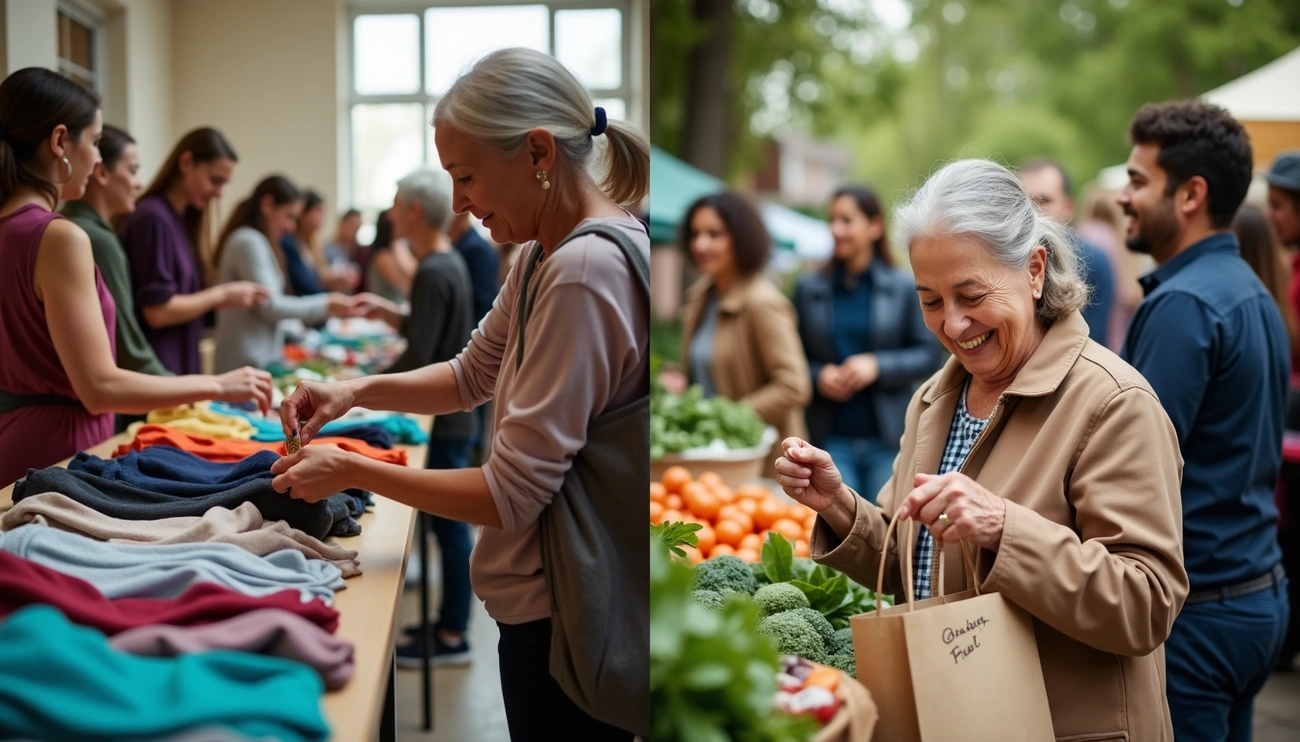
Ethical consumption works best through secondhand shopping. Research shows that 75% of Americans and 83% of Gen Z shoppers have bought or would buy pre-owned clothes [11]. Thrifting saves money and keeps clothes away from landfills.
You’ll find great deals at thrift stores, consignment shops, and apps like Poshmark or ThredUp [12]. The best way to thrift is to make a quick list before you go. This helps you stay focused and avoid buying things you don’t need [12].
Many people practice this type of responsible consumerism because they need to, not because it’s trendy. The growing popularity of thrifting has made some stores raise their prices. This affects people who rely on secondhand shopping [13].
Choose local and seasonal products
Seasonal produce tastes better, packs more nutrients, and costs less when it’s plentiful [14]. You’ll pay less for in-season fruits and vegetables because they don’t travel as far or need storage [15].
Savvy shoppers cut their food bills by buying from local farm shops once a week. They use everything before buying more [16]. One shopper says, “By buying once a week only I ensure I use up what I have. I noticed I have wasted less food and saved money” [16].
Apps like Olio or Too Good To Go, and community fridges, help you find cheap or free local food that might otherwise go to waste [16]. These options fit perfectly with ethical consumerism.
Repair instead of replace
The right-to-repair movement keeps growing as people see how fixing things helps their wallets and the environment. Recent studies show that 69% of adults prefer fixing broken items rather than buying new ones [17]. Last year, 40% fixed clothes or fabrics, 38% repaired furniture, and 37% handled plumbing issues [18].
Basic repair skills can make things last longer. You can learn to sew buttons, tighten screws, or fix small tears. One expert puts it: “A loose button or small tear isn’t the end, it’s a quick fix” [12].
Use less, waste less
The foundations of why ethical consumerism is essential start with cutting back. Here’s what works:
-
Plan meals to avoid impulse buys
-
Store food the right way to make it last
-
Freeze leftovers instead of throwing them out
-
Turn food scraps into compost
-
Buy in bulk to cut down on packaging [7]
Online grocery shopping helps many people reduce their bills and waste. They buy just what they need [16]. Others check their fridge before shopping and turn extra vegetables into soup or casseroles [16].
Support ethical brands during sales
In stark comparison to what many think, ethical consumer choices come at different price points. Sustainable brands often slash prices during sales, sometimes up to 75% off [6]. Good On You’s website shares special deals from sustainable fashion brands they rate as ‘Good’ and ‘Great’ [19].
Signing up for newsletters from ethical brands gets you discount codes and sale alerts [12]. Sustainable shopping websites remind us that “the most ethical purchase is no purchase at all.” This encourages smart buying even during sales [20].
How low-income communities already practice responsible consumerism
Low-income communities worldwide practiced “ethical consumerism” long before it became trendy. These communities show that responsible consumerism exists at every income level, not as a lifestyle choice but as a daily necessity.
Frugality as a form of sustainability
Religious and philosophical traditions have deep roots in frugal living, which represents a powerful way to stay sustainable. Yes, it is defined by “restrained acquisition and resourceful usage of economic goods to achieve longer-term goals” [21]. This mindset naturally fits with ethical consumption through:
-
Making products last longer by fixing and reusing them
-
Getting the most out of what you own
-
Looking at long-term satisfaction instead of quick rewards
People who live frugally spend carefully and make the most of their belongings without giving in to social pressure [22]. They cut down on waste by squeezing every bit of value from products. They fix things, reuse them, and find creative ways to use them—making sustainability a natural part of life.
Community sharing and reuse culture
Reuse charities help struggling families by giving them second-hand furniture, household items, clothes, and appliances [23]. The benefits go way beyond just having stuff—better beds mean better sleep, tables become places where families learn together, and proper work clothes boost job interview success rates by 53% [23].
These reuse programs create jobs for people who need them most. They help families with tight budgets afford essential needs like food and healthcare. The programs build stronger communities by connecting people from different economic backgrounds [23].
Examples from around the world
Communities everywhere find creative ways to help each other thrive. Students in rural North Carolina use the “Boone Student Beeper”—a Facebook-based rideshare group—to get around safely. This grassroots solution performs better than Uber in areas with limited transportation options [24].
Goodwill International shows how reuse can work on a massive scale. Their U.S. network handles about 4.6 billion pounds of reusable items each year [4]. These donations helped nearly 2 million people improve their careers, and more than 123,000 found jobs [4].
The Via Verde complex in the South Bronx offers energy-efficient co-op apartments to residents with low and moderate incomes. The building addresses neighborhood problems such as high asthma rates and limited access to fresh produce [1].
Barriers to ethical consumption—and how to overcome them
People show more interest in ethical consumption, but several roadblocks keep consumers from making better choices. Everyone needs to know how to deal with these challenges to make ethical shopping available to all.
Greenwashing and misleading labels
Greenwashing has become a significant concern as companies make false or misleading environmental claims. Recent data shows that 40% of green claims on clothing, cosmetics, and food company websites might mislead consumers. Fashion brands push this number to 60%, while some companies reach an alarming 90% [3]. Companies often use vague language, make minor improvements seem significant, and highlight single green features while hiding their overall environmental footprint [25].
You can curb greenwashing by looking past marketing claims and finding real proof of eco-friendly practices. Watch out for empty words like “natural,” “eco-friendly,” or “green” that lack specific details or independent verification [26].
Lack of access to ethical options
Many consumers face real barriers to buying ethical products. The average American woman wears a size 16, but many sustainable fashion brands stop at size 12 [27]. People living outside cities also struggle since ethical options cluster in urban areas.
Plus-size shoppers often buy from brands that don’t match their values because they can’t find inclusive, ethical options [5]. Innovators in sustainable fashion now promote greater inclusivity in both sizes and prices.
Higher upfront costs vs. long-term savings
Price remains a significant obstacle—ethical products cost more upfront. Looking at cost-per-wear shows possible savings over time. A €60 sweater worn 100 times costs about €0.60 per use, which could save money compared to replacing cheap fast-fashion items repeatedly [28].
Start by buying fewer, better-quality pieces for your wardrobe. Secondhand shopping helps cut costs. Timeless pieces that stay wearable for years make the best investments [28].
What certifications to trust
The marketplace has many sustainability labels, so finding trustworthy certifications is vital. These independent verifications stand out:
-
B Corp certification for overall social and environmental performance
-
Fair Trade International for ethical labor practices
-
Global Organic Textile Standard (GOTS) for organic textiles
-
Rainforest Alliance for sustainable agriculture
Note that small businesses often can’t afford certification costs, which can exceed $25,000 yearly [29]. The best approach combines checking certifications with reviewing the company’s information on its environmental and social practices.
Conclusion
Ethical consumerism has grown beyond a luxury for the wealthy. Our research shows that responsible purchasing decisions are present across all socioeconomic levels and often take the form of a practical necessity rather than trendy virtue signaling. Economic and ethical choices frequently align—buying secondhand, repairing items, reducing waste, and mindful consumption benefit both our wallets and the planet’s health.
Long before sustainability became trendy, many communities practiced it and showed how frugality could be a powerful environmental stance. Their wisdom proves the idea that ethical living requires wealth. These communities teach us that resourcefulness, sharing economies, and waste reduction represent genuine ethical consumerism without expensive price tags.
Of course, some obstacles remain—from deceptive greenwashing tactics to genuine supply issues. People can work through these challenges by learning about trustworthy certifications and supporting ethical companies during sales. Sometimes the best sustainable choice is not buying anything at all.
Individual choices create powerful collective effects. A single person buying secondhand clothes might seem small, but millions making similar decisions reshape markets and production systems. Ethical consumption serves as both a personal statement and a powerful economic force.
The ethical consumerism movement marks a radical shift in how people view their purchasing power. Products with environmental and social responsibility claims keep growing, which proves that consumers vote with their wallets for the future they want.
This reality check reveals ethical consumerism as fundamentally democratic—open to everyone, regardless of income level. While money can sometimes make confident choices easier, ethical consumption often means buying less, choosing carefully, and valuing longevity over novelty—practices that work across all economic levels.
Ethical consumerism has become more about changing mindsets than about premium lifestyles. Shoppers at every income level can make meaningful choices that line up with their values while staying within their budgets. The most eco-friendly approach combines mindful consumption with appreciation for what we already have—a philosophy that transcends economic status while building more responsible market systems.
Key Takeaways
Ethical consumerism isn’t exclusive to the wealthy—it’s a mindset shift accessible to people of all income levels that often saves money while protecting the planet.
• Thrift shopping and buying secondhand reduces waste while offering significant savings, with 75% of US consumers willing to shop for re-owned items.
• Low-income communities already practice sustainability through necessity—repairing items, sharing resources, and avoiding waste are forms of ethical consumption.
• Simple changes cut costs and environmental impact: choosing seasonal produce, learning basic repairs, and reducing overall consumption benefit both wallet and planet.
• Greenwashing affects 40% of environmental claims, so look for third-party certifications like B Corp, Fair Trade, and GOTS rather than vague marketing terms.
• Quality over quantity saves long-term money: a €60 sweater lasting 100 wears costs €0.60 per use, often cheaper than repeatedly replacing fast fashion.
The most ethical purchase is often no purchase at all—mindful consumption and maximizing what you already own represent authentic, sustainable living, regardless of income level.
FAQs
Q1. Is ethical consumerism only possible for wealthy people? No, ethical consumerism is accessible to people across all income levels. Many sustainable practices, such as buying secondhand, repairing items, and reducing overall consumption, can save money while being environmentally responsible.
Q2. What are some affordable ways to practice ethical consumerism? Some budget-friendly ethical consumer practices include buying secondhand or thrifted items, choosing local and seasonal products, repairing rather than replacing, reducing waste, and supporting ethical brands during sales.
Q3. How do low-income communities already practice responsible consumerism? Many low-income communities have long practiced sustainable habits out of necessity, such as repairing items, sharing resources, avoiding unnecessary consumption, and maximizing the utility of existing possessions. These practices align closely with ethical consumerism principles.
Q4. What are some barriers to ethical consumption, and how can they be overcome? Common barriers include greenwashing, lack of access to ethical options, and higher upfront costs. These can be addressed by researching trustworthy certifications, exploring secondhand markets, and considering long-term savings of quality items over cheaper, disposable alternatives.
Q5. Why is ethical consumerism important in today’s world? Ethical consumerism is crucial because it encourages corporate responsibility, reduces environmental impact, and promotes fair labor practices. As consumers become more conscious of their purchasing power, their collective choices can reshape markets and production systems towards more sustainable and ethical practices.
Our carbon experts help production studios frame strategy, train teams and track results — tailored to operational constraints.